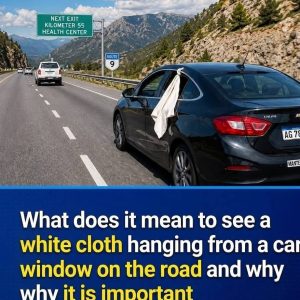
In some areas, particularly parts of the United States, a white cloth tied to a vehicle can indicate that the car has broken down and its occupants need assistance. For example, North Carolina’s official driver guidance describes displaying a white cloth from a window or antenna when a disabled vehicle is left beside the road. However, this practice is not universal, and drivers should never assume that every white cloth carries the same meaning.
Other explanations are possible. Someone might use a cloth to attract attention during an emergency, identify a vehicle traveling with a group, or simply mark a car that cannot continue its journey. Because the signal is informal and its meaning varies, the cloth alone cannot tell you whether someone needs medical assistance, roadside help, or something else entirely. It is important to observe the surrounding circumstances rather than jumping to conclusions.
Another misconception is that a white cloth gives a driver special permission to ignore traffic laws. It does not. A private vehicle displaying a cloth does not automatically receive emergency-vehicle privileges or the right to speed, pass through red lights, or use restricted lanes. Drivers should continue following traffic rules and avoid sudden maneuvers. If you see a vehicle stopped on the shoulder, slow down appropriately, leave sufficient space, and watch for pedestrians or other hazards.
If someone appears to be in immediate danger, contact emergency services and provide the vehicle’s location. If the situation seems less urgent, roadside assistance may be appropriate. You can offer help when it is safe, but never stop somewhere that could endanger you or other motorists. The most important lesson is that unusual roadside signals deserve attention, not assumptions. A small piece of white fabric might be someone’s attempt to communicate a problem, and understanding that possibility could help you respond more safely.




This Post Has One Comment